
The Discipline Behind the Design
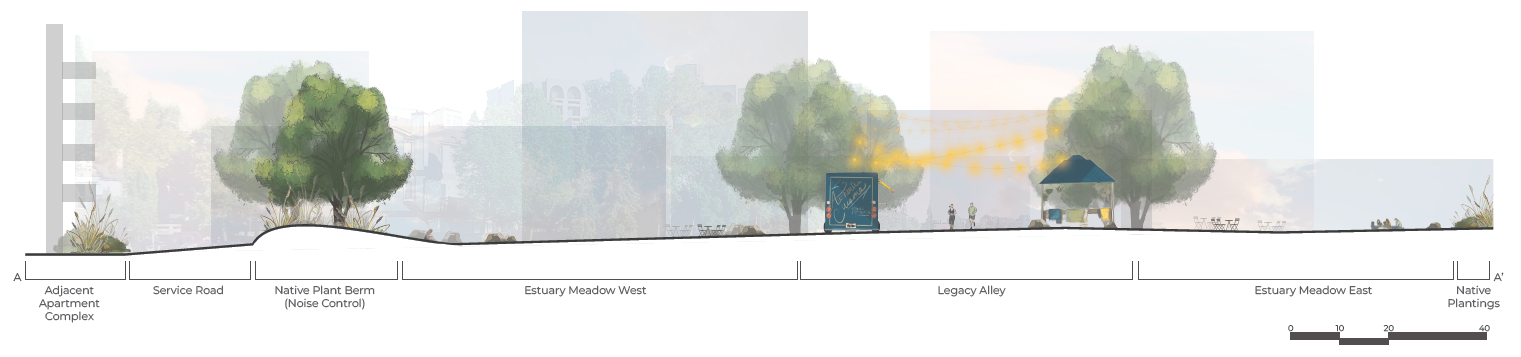
A section I designed for a college studio project my 4th year at Cal Poly.
Since when has "Free" felt like a Gut Punch?!
Not too long ago, I was sitting in a team meeting where our goal was to review and re-imagine the design process that we had been developing for over a year. We had wrestled with roles and responsibilities. Adjusted timeframes. Refined workflows. Clarified deliverables.
Design was being treated seriously.
And then someone said:
“Maybe we should just offer the design for free.”
I remember the pit hitting the bottom of my stomach as the rest of the team nodded in agreement.
At the time, I couldn’t fully articulate why I felt like I had been kicked in the gut, but I am early in my career, and I didn’t have the words or authority to explain what felt so wrong.
But what I did know is that statement hurt - deeply.
The Invisible Weight of “Free”
What got me onthios topic was an article by Angelique Robb of Synkd about why design is not free, and shouldn’t be. In it, she references Eric McQuiston's article and makes the point I couldnt articulate in that meeting:
The more seamless a project looks in the field, the more invisible the thinking behind it becomes.
And that’s exactly it.
When a landscape project flows effortlessly, when materials transition naturally, when the layout feels obvious and intuitive…
It’s not because the design was simple.
It’s because the thinking was rigorous.
The smoother the installation, the longer the site analysis probably was. The more natural the grading feels, the more technical detailing happened behind the scenes. The more “easy” the finished product looks, the more time was spent wrestling with constraints before a shovel ever hit the ground.
But when you call that “free,” you quietly reduce all of that invisible labor to an add-on.
What “Free” Really Felt Like
Looking back, I realize my reaction in that meeting wasn’t about money.
It was about value.
When I heard “let’s offer the design for free,” what I internalized was:
The five-year degree? Free. The years of preparation before school? Free. The technical knowledge? Free. The hours learning grading, drainage, plant science, detailing, construction realities? Free.
So I loved reading that others too believe that real design requires:
Years of experience
Technical fluency
Understanding construction sequencing
Awareness of long-term maintenance implications
Communication skills
Software fluency
And most importantly — time and mental energy
Creativity isn’t just inspiration. It’s disciplined thinking. It’s iteration. It’s clearing mental space to solve problems that don’t have obvious answers.
When we position design as something that can be “tacked on,” we devalue the very phase where project success is born.
The Blueprint Is the Foundation
In residential design-build especially, there can be pressure to treat design as a sales tool rather than a professional service.
But the blueprint is not marketing.
It’s the framework that determines whether:
The budget holds
The installation runs smoothly
The client feels understood
The space actually functions five, ten, twenty years from now
If we undervalue that stage, we undermine the integrity of the entire project.
Raising the Bar
As I look ahead in my career in landscape design and landscape architecture, I’m encouraged.
There are professionals in this industry who respect the process. Who value the blueprint. Who understand that design is not decoration, but decision-making.
So thank you to those who:
Charge appropriately for design
Advocate for the thinking phase
Educate clients about what they’re truly paying for
That’s how we raise the bar.
Not by making design cheaper.
But by making its value unmistakable.
